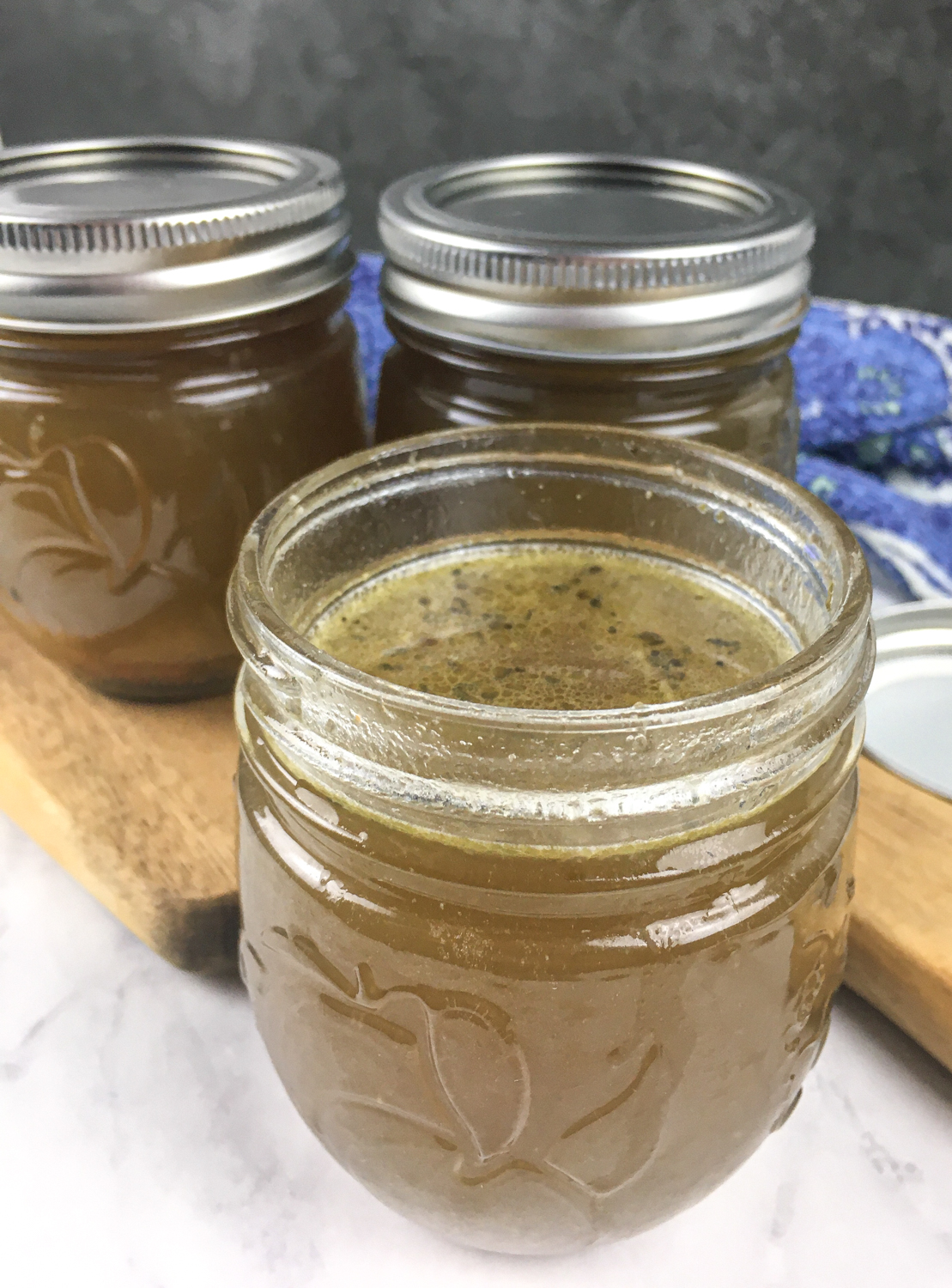
Easy Homemade AIP Chicken Broth (Low Histamine-Friendly)
There’s something almost magical about turning scraps into something nourishing and delicious. Homemade chicken broth is one of those simple kitchen staples that feels like gold in a jar. Not only does it taste far better than anything you’ll find at the store, but it’s also budget-friendly and supportive for those of us navigating histamine intolerance or following the Autoimmune Protocol (AIP).
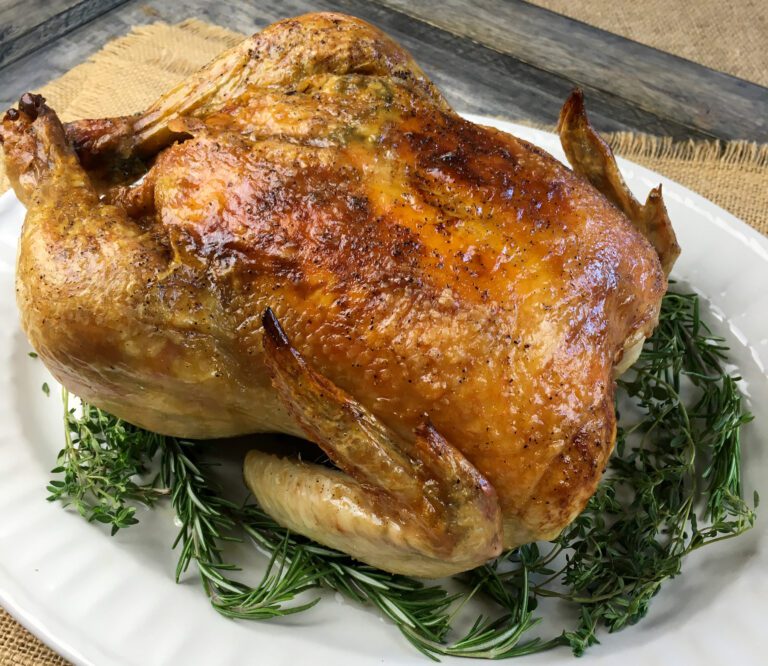
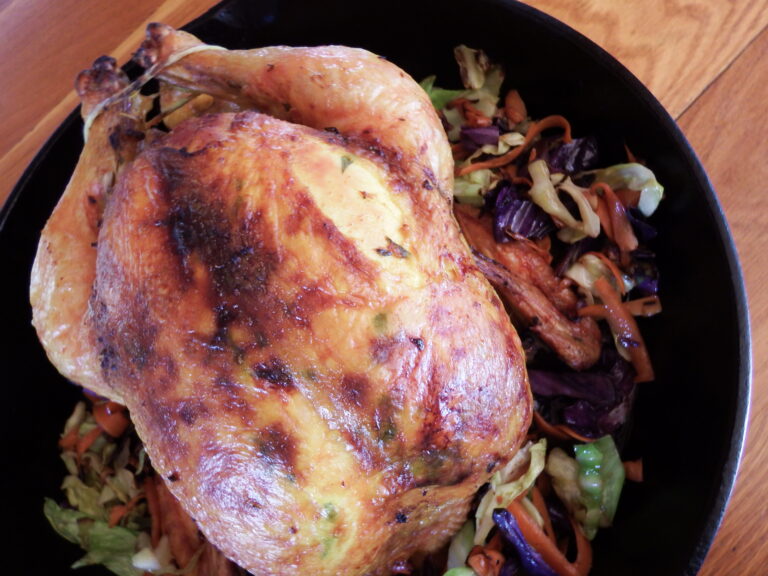
If you aren’t super sensitive, you can make it from the leftover carcass of a roasted chicken. Nothing goes to waste, and you end up with a flavorful, soothing broth that’s perfect for sipping or using as a base in soups, stews, sauces, or grain-free dishes. For those who are sensitive to leftovers or bone broth, see the meat broth variation.
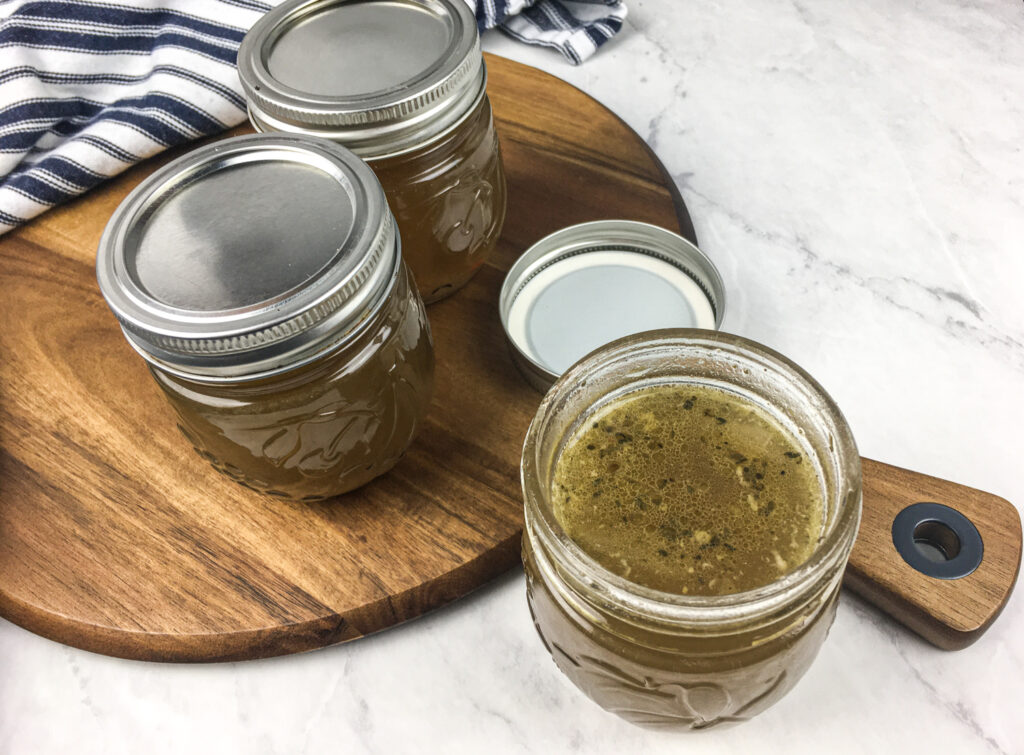
Why Make Your Own Broth?
For anyone with histamine issues or autoimmune disease, homemade broth is a game-changer. Store-bought versions often sit on shelves for ages, are loaded with preservatives, and sometimes sneak in ingredients like yeast extract, “natural flavors,” carrageenan, or peppercorns that don’t work for sensitive folks.
By making broth yourself, you control the ingredients, skip the high-histamine seasonings, and keep it fresh. For those following AIP, this recipe is completely compliant during the elimination phase—herb-based seasonings, no nightshades, no peppercorns. Just whole-food nourishment that supports gut healing and adds depth to your meals.
Ingredients
- 1 roasted chicken carcass (from a 5–6 lb chicken)
- 3 large carrots, roughly chopped
- 3 large celery stalks, roughly chopped
- 2 medium yellow onions, roughly chopped
- 4–5 large cloves garlic, peeled and smashed
- 1 tbsp dried oregano
- 1 tbsp dried parsley
- 1 tbsp dried thyme
- 1 tsp coarse sea salt (optional; adjust to taste)
- 2 whole bay leaves
- 12 cups water
Stovetop Instructions
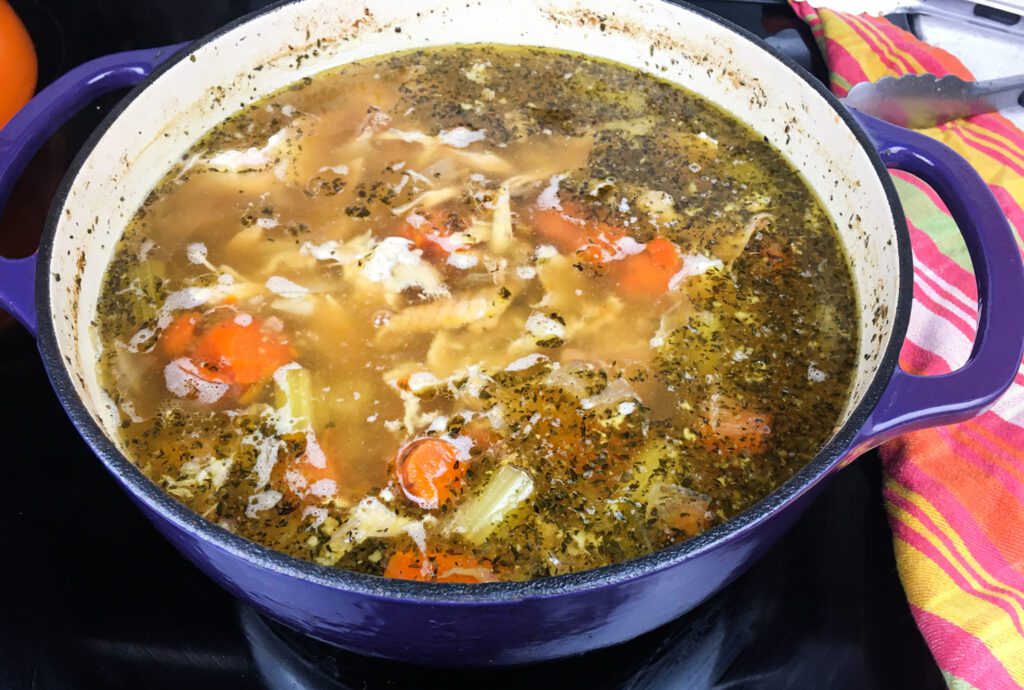
- Place the chicken carcass in a large stock pot. Add carrots, celery, onions, and garlic.
- Sprinkle in oregano, parsley, thyme, salt, and bay leaves.
- Pour in the water and bring to a boil over high heat.
- As soon as it boils, reduce heat to medium-low and let simmer gently for 3–4 hours, stirring occasionally.
- Once the broth is rich and golden, strain out the solids.
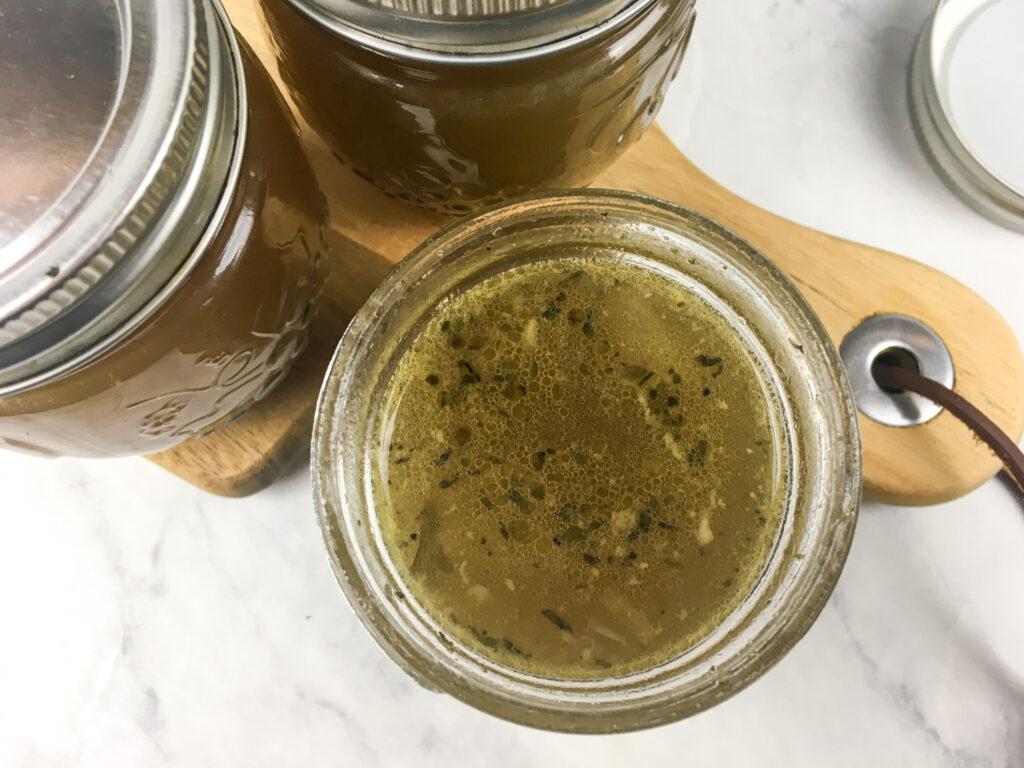
- Let it cool slightly before pouring into glass jars or freezer-safe containers.
Pressure Cooker Variation (For Histamine Sensitive Folks)
If long-cooked broths don’t sit well with you—or if you need to minimize histamine build-up—use a pressure cooker (like an Instant Pot).
- Add the same ingredients to the pot.
- Cover with water to the max fill line.
- Cook on high pressure for 45 minutes, then let pressure release naturally.
- Strain and cool before storing.
This method reduces cooking time, keeps the broth gentle, and still extracts great flavor.
For those who are very sensitive, a meat broth may be a more suitable alternative. Simply use fresh chicken in place of the carcass.
Meat Broth for Extra Sensitive Folks
If even a pressure-cooked broth leaves you flaring, you can make a meat broth instead. This means using raw chicken meat (like thighs or drumsticks) rather than bones and skin. Meat broth cooks faster, is gentler on the gut, and tends to be better tolerated by those with severe histamine intolerance or a glutamate sensitivity.
- How to make it: Simmer raw chicken meat with vegetables and herbs for about 45–60 minutes on the stovetop, or 20 minutes in a pressure cooker. Strain and store as usual.
- Bonus: You can shred the cooked chicken and use it in meals, so nothing goes to waste!
Freezing & Storage Tips
- Fridge: Store in airtight containers up to 4 days.
- Freezer: Store up to 3 months in freezer-safe jars or bags.
Freezing Hacks:
- Ice cube tray method: Freeze broth in ice cube trays, then transfer to a bag. Perfect for adding small amounts to sautéed veggies, sauces, or grains.
- Freeze in portions: Freeze in silicone molds or freezer bags laid flat for quick-thaw single servings or to use in recipes.
- Batch cooking: Freeze in quart-size containers for future soups or stews.
Tip: Always leave an inch of space at the top of jars before freezing—liquid expands and can crack glass.
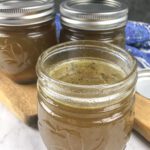
Homemade Chicken Broth
Equipment
- 1 Stock pot
Ingredients
- 1 5-6 lb roasted chicken carcass This is the starting weight of the raw, whole chicken that you roasted, and not the weight of the leftover bones.
- 3 large carrots, roughly chopped
- 3 large celery stalks, roughly chopped
- 2 medium yellow onions, roughly chopped
- 5 large cloves garlic, peeled and smashed
- 1 Tbsp dried oregano
- 1 Tbsp dried parsley
- 1 Tbsp dried thyme
- 1 tsp coarse sea salt
- 2 whole bay leaves
- 12 cups water
Instructions
- Place chicken carcass to a large stock pot, then add the carrots, celery, onions, and garlic around the chicken. Sprinkle oregano, parsley, thyme, salt, and bay leaves on top.
- Add water and bring to a rapid boil over high heat, then immediately reduce heat to medium-low. Simmer for 3½ – 4 hours, stirring occasionally.
- When the meat is falling off the bone, remove from heat. Carefully strain the contents of the pot to separate the liquids and solids. Reserve the liquid and the larger pieces of chicken. Store chicken separately in the refrigerator or freezer to stir into soups later and discard the remaining solids.
- Allow broth to cool and transfer to airtight, freezer-safe containers. Freeze for longer term storage or store in the refrigerator for several days before using. Enjoy!
Notes
Serving Suggestions
- Sip it warm from a mug as a healing, hydrating drink.
- Use as a base for low histamine soups and stews.
- Add to cooked rice or quinoa for extra flavor.
- Use in place of water when steaming veggies for a nutrient boost.
Final Thoughts
Homemade chicken broth is more than just a recipe—it’s a healing kitchen staple for both the low histamine and AIP communities. It’s frugal, flavorful, and adaptable to your needs. Once you make your own, you may never go back to boxed broth again!
Have you tried freezing broth in ice cube trays or silicone molds? Let me know your favorite way to store and use it in the comments below.